
Meal planning & menu ideas
Meal Planning for Real Indonesian Weeks
A weekly plan is a decision you make once so the same decision does not greet you at 6pm every day. Here are the menu structures, shopping logic, and portions that survive a busy Jakarta week.
Start with the week, not the day
Planning day by day collapses the first time a meeting runs late. Decide the shape of the seven days before you open a single recipe page, and the rest of the week has somewhere to land.
Most Jakarta households land around four cooked dinners, two nights eating from the warung nearby, and one flexible evening. Build the plan on that shape. A plan that assumes seven cooked dinners is planning for someone else's life — yours already has a commute, a long Thursday, and a fortnight where nothing goes to script.
So mark the week's pattern first: which nights you cook, which nights run long, where takeaway is already a given. Write it down. Only then pick the dishes — the pattern is the part that holds when the week gets loud.
-
Four nights
Cooked at home, one protein base to build the week around.
-
Two nights
Warung or simple market food, budgeted into the plan from the start.
-
One evening
Left flexible on purpose, so a heavy day does not break the week.
A weekly menu structure you can actually run
This is a structure, not a script. Swap proteins on price and availability, keep two vegetable options per meal where you can, and leave the loose evening open.
-
Monday
Fish with stir-fried vegetables and rice — start the week on the lightest cook.
Home cooked
-
Tuesday
Tempeh orek with rice and a clear soup — cheap, quick, and easy to double.
Home cooked
-
Wednesday
Chicken with a large vegetable side; cook the portion that carries into Thursday.
Home cooked
-
Thursday
Leftovers night, intentionally. The slot exists so a heavy day does not undo the plan.
Reheat
-
Friday
Eggs in whatever form the house prefers, with a vegetable on the side.
Short cook
-
Saturday
Market day — cook the more involved dish while the shopping is fresh.
Market day
-
Sunday
Flexible — order out, eat with family, or clear what is left in the fridge.
Flexible
The point of the ledger is that no day starts from a blank question. Swap beef for tempeh, fish for eggs, and the shape of the week stays the same.

Buy fresh vegetables twice a week rather than once. The second trip is what keeps the plan alive on Thursday.

Building a shopping list that matches the menu
Write the list from the menu, not from the aisles. If someone else does the shopping, the list has to survive being read by another person — say quantities the way the market says them.
- Protein
- One base for the week plus a backup — half a kilo of tempeh, a chicken, a tray of eggs. Half a kilo is a real shopping term; "some tempeh" is not.
- Vegetables
- Enough for three days, then restock midweek. Two bunches of kangkung, a bag of carrots, whatever greens look best that day.
- Staples
- Rice, oil, garlic, shallots, kecap manis, stock. Check what runs out on the same day every week and buy it then.
- Fruit and fallbacks
- Fruit for the week, plus one or two frozen or pantry items for the day the market trip does not happen.
Two trips
Shop vegetables twice a week. It costs no more and it is the reason Thursday still has a vegetable on the plate.
Paste it on
Keep the list where the cook sees it. A list in a notes app is a list nobody reads at 6pm.
Batch cooking without eating the same meal five times
Batch the components, not the finished dishes. Cook rice for two days. Prepare one protein base on Sunday and keep it plain enough to go in several directions. Cook vegetables fresh, or reheat a large batch from earlier in the week.
That gives you combinations instead of repeats: the same chicken becomes a soup on Monday and a stir-fry on Wednesday. Refrigerate what you will eat within three days and freeze the rest. The thirty minutes that buys you on a Wednesday evening is usually the difference between the plan and instant noodles.
Cook once, eat in three directions
- Sunday: rice, a plain protein base, one large vegetable batch.
- Tuesday: the base goes into a soup with fresh greens.
- Thursday: leftovers night, assembled from what is already cooked.
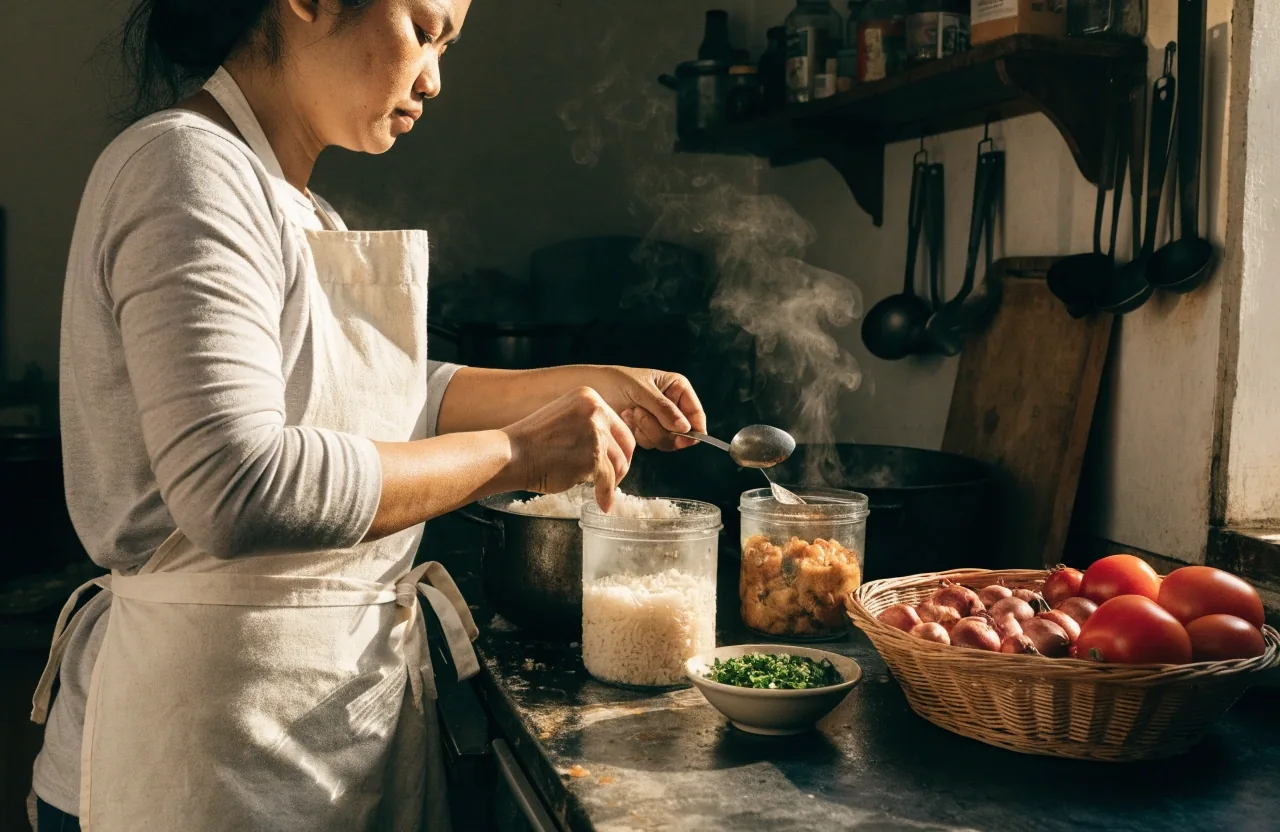
Prep that takes an hour on Sunday is not a chore; it is four weeknights buying back their own time.
Swaps for the packaged-food slots
Most weeks have two or three moments where a packet wins: late evening, rushed morning, a long commute home. Plan for those slots instead of pretending they do not exist.
The hungry evening
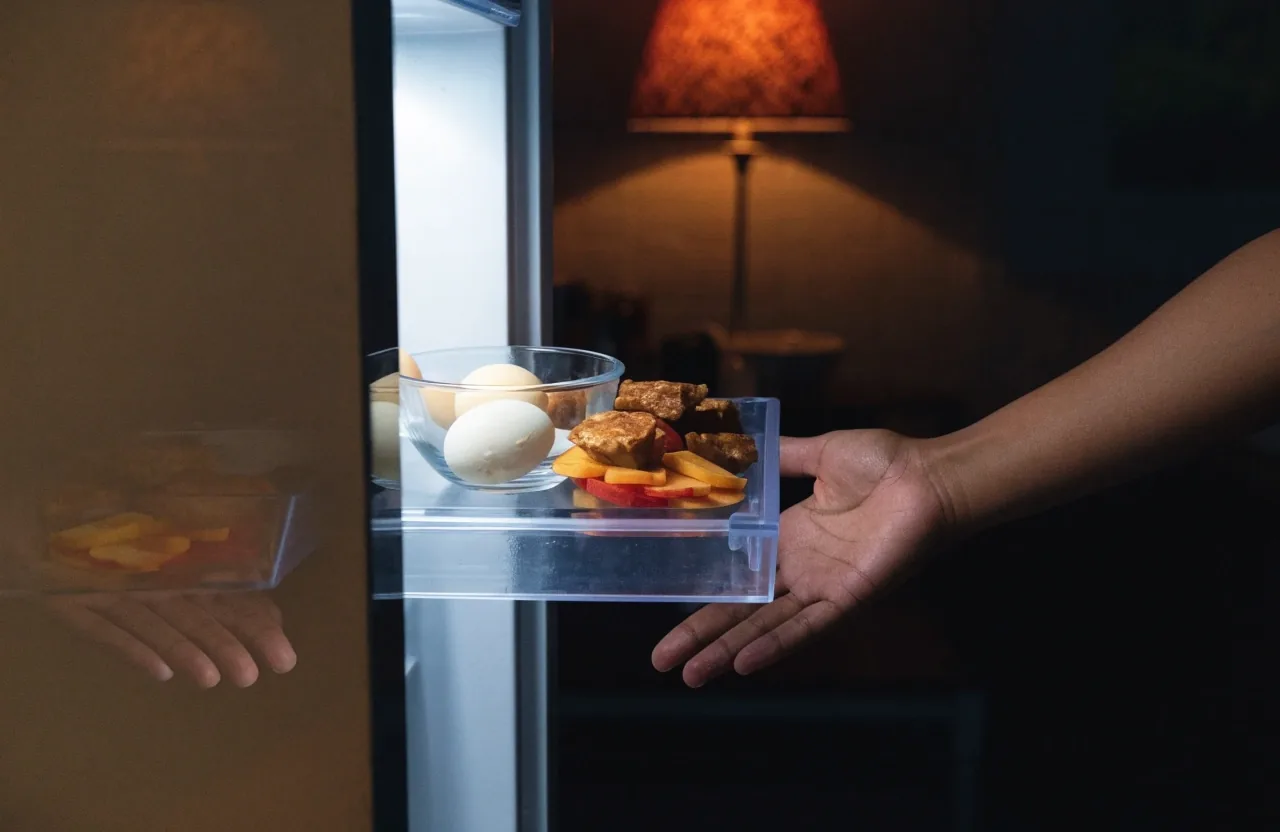
Keep fruit, boiled eggs, or roasted tempeh within reach at the front of the fridge. A bowl that takes thirty seconds to put together beats a decision made while standing in front of an open cabinet. If you can see it, you will eat it; that is the whole strategy.
It also keeps the evening from becoming a second dinner. Something small and real at seven often means a normal portion at nine, rather than a large one at eleven.
Rushed mornings
A breakfast you can assemble in five minutes works better than a resolution to wake earlier. Keep one option that needs no cooking.
If noodles stay
Add an egg and a handful of vegetables to the bowl. The meal improves without pretending it is something else.
Feeding a household with different needs
One menu, varied portions, is the rule that saves the most time. Allergies, food preferences, and textures go into the consultation intake so the menu is built around them from the start.
See how an online consultation works-
Cook one shared base
Rice, a protein, and a vegetable that everyone at the table can eat. The base is not the compromise; the portions are where the adjustments live.
-
Adjust at the plate
More rice for a teenager, more vegetables and protein for the adults, softer textures for older family members when that is what the meal needs. Same pot, different plate.
-
Keep separate cooking as the exception
A second version is sometimes unavoidable. Decide which meals genuinely need it with your dietitian rather than adding a second menu to every dinner.
When the plan falls apart
It will, somewhere around week three, usually during a heavy stretch at work or a holiday. The recovery move is not to restart from Monday with a stricter plan.
Pick up the current structure and drop the failed days. Keep the shopping-list habit even in a bad week — the list is what keeps the loop going when the cooking does not. If three weeks pass and nothing from the plan is happening, that is a signal the plan was too ambitious. Bring it to a follow-up session rather than abandoning it quietly, and let your dietitian simplify it down to what fits the week you actually have.
Turning a plan into a routine
A plan becomes a routine when the decisions stop feeling like decisions. The markers are ordinary: you buy the same staples without checking a list, you know what Tuesday's protein is, and the vegetable restock happens on its own.
That usually takes one to two months of using a written plan. After that the written version can be retired. Until then, keep it somewhere the whole household can see it — the fridge door works better than a phone.
Questions that come up mid-week
How many dinners should I actually plan to cook?
Plan the number you will genuinely cook, not the number you would like to. For many Jakarta households that is four cooked dinners, two nights eating out or from the warung, and one evening left flexible. If you plan seven and cook three, the plan is not wrong — the number is.
How do I keep two vegetable options on the plate without extra cooking?
Cook one vegetable and serve a second raw or lightly dressed: cucumber, tomato, or a handful of leaves. Two options, one pan. Keeping the second option cold and quick is what makes it realistic on a weeknight.
What should I bring to a consultation about meal planning?
Bring the shape of your week, who you cook for, allergies and foods your household will not eat, and roughly what you spend on food. A photo of what a normal dinner looks like on your table is more useful than a list of what you think you should be eating.
Can I follow a weekly menu when everyone in the house eats differently?
Yes, by cooking one base and adjusting portions and textures at the plate. Where a genuine second version is needed, decide which meals require it instead of doubling every dinner. The consultation intake is where those differences get written down.
Bring your actual week to a dietitian
Weekly menu frameworks, portion thinking, and a shopping list that fits your household — worked out with a registered dietitian in an online consultation, at your own kitchen's pace.
Consultation address
Jl. Gatot Subroto No. 52, Jakarta Selatan, 12930, Indonesia
Phone
+62 21 520 1234
NutriKonsul provides general nutrition guidance and meal-planning support. It is not a substitute for personalised advice from a qualified professional, and individual needs vary.